
Why does my deadbolt work only when the door is open?
That can point to alignment or interference where the bolt meets the frame. The entire opening needs assessment; replacing the cylinder alone may not resolve it.
A troublesome lock does not always need a new lock. The difficulty may be inside the cylinder, at the latch, or where the door meets the frame. For lock repair in Sandy Springs, describe what you feel and when it happens: a key that catches, a handle that sags, a bolt that stops halfway or a door that needs a shove. Those details are more useful than a guess about which part has failed.
Does the lock operate smoothly? That observation helps separate possible causes.
Binding may involve the frame, strike or alignment as well as the cylinder.
Mention a bent blade, sticking key or loose handle. Stop forcing a reluctant mechanism.
Does the lock behave differently with the door open and closed? Does one key work better than another? Has the problem developed gradually or followed a specific event? These observations help narrow an inspection without requiring you to dismantle anything. Do not keep testing if a key is bending or the hardware feels as though it may break. Leave the door in a safe, usable state where possible and explain whether you still have another authorized entrance. An inaccessible opening may require a different appointment from a repair on a door that is already open.
The bolt must enter its intended opening without excessive resistance. A change in alignment, loose hardware or interference at the strike can make a sound cylinder feel faulty. Fitting another lock without assessing the surrounding opening can leave that resistance in place. Tell us if you have to lift, push or pull the door to lock it. Also mention any recent work on the door, frame, hinges or weather stripping. The useful outcome is reliable operation of the complete opening, not simply a new part installed in the same problem.
Mention whether the key and handle move smoothly.
Door alignment and the strike may be part of the issue.
Describe the key, cylinder and handle symptoms.
These observations help explain the issue, not diagnose it. Avoid forcing the lock.
A snapped key may leave part of the blade inside the cylinder. If that happens, stop turning or pushing the remaining piece. Do not add glue or attempt to drive another key into the opening; those actions can complicate assessment and damage components. Keep both the broken key and any working spare available for the visit. Extraction and restoration depend on the cylinder's condition. Sometimes the cylinder can remain in service; other cases need a replacement or another change that should be explained and approved separately.
A repair discussion should include what failed, whether suitable parts are available and how the lock is used. A seldom-used interior opening and a busy exterior storefront do not place the same demands on hardware. A damaged body, unavailable component or unsuitable function may make replacement more practical than attempting a limited repair. Ask whether the proposed work addresses the observed cause and what remains outside the scope. If you want to preserve a finish or handleset, raise that preference before new hardware is selected.
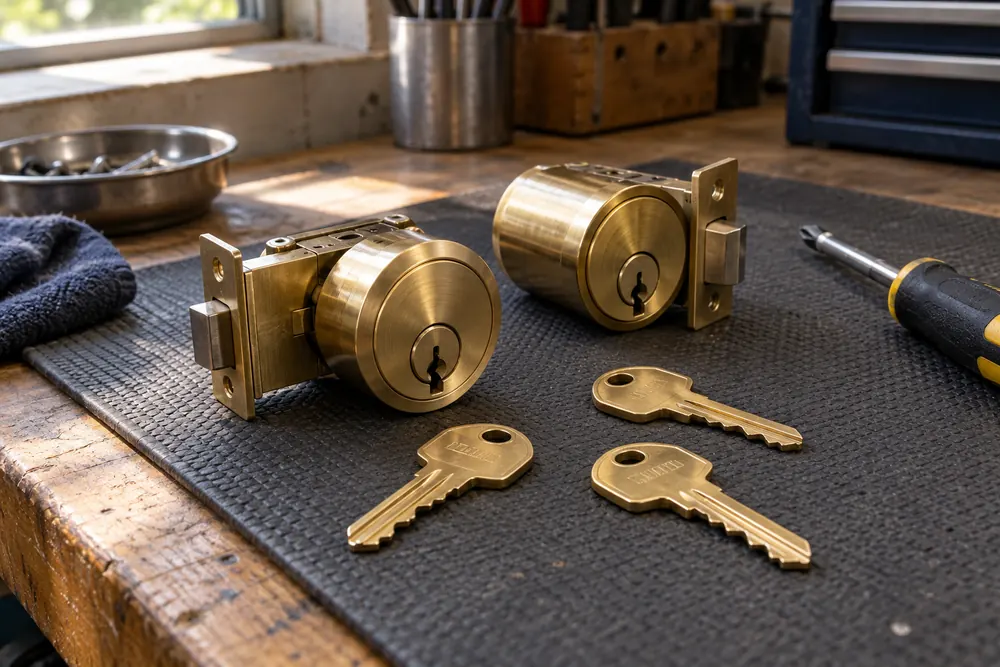
After a repair, the important test is the way the opening will be used tomorrow. Check the key and inside operation, normal latching, and locking with the door closed once open-door testing is complete. If several people use different keys, have the relevant keys available. For a managed Sandy Springs property, include the person responsible for the door in the handover so recurring symptoms can be recorded accurately. Call 404-882-2505 with the address, the type of opening and a description of the fault to discuss availability and a suitable assessment.
Talk through the location, the opening and the outcome you need. Confirm availability and the scope before arranging work.
Call 404-882-2505That can point to alignment or interference where the bolt meets the frame. The entire opening needs assessment; replacing the cylinder alone may not resolve it.
Avoid forcing tools, glue or the remaining key into the cylinder. Keep the pieces and any spare key available, and describe the situation when arranging assessment.
Tell us where you are and what is happening. Confirm availability, the scope of work and the quote before arranging service.